-
Islamic Religious Rituals
Religious Rituals, The Meaning of religious ritual and The impact on the lives
Religions have different rituals and practices that accompany and highlight religious experience. A ritual must fit into four categories. These four categories are that it must be a repetitive social practice, it must be set off from the routines of day to day life, it must follow some sort of ritual schema, and it must be encoded in myth. Ritual often has its roots in myth and religion, tying itself to ancient practices between the divine and humans. However, a ritual does not have to be religious in nature;
Religion can be defined as concepts or ideas and the practices associated with them. These practices hypothesize reality beyond that which is instantly available to the senses. An example of an old ritual that is encoded in myth and religious symbolism can be found in the catacombs of Sicily where over 2,000 dead bodies are kept. Most of these bodies have been embalmed or mummified and dressed in the attire that suited their profession, many of them being nobles, professionals, and merchants
Another great example of Ritual can be seen in the Sinhalese Buddhists of Sri Lanka. To cure people of illness the Sinhalese perform an elaborate exorcism ritual that involves all night dancing, singing, and role playing. The ceremony traditionally lasts from Midnight until 6 AM. At Midnight, costumed actors appear to portray the afflicting demons. As time passes, these figures are turned into comedic figures of ridicule. At 3 AM actors dressed as Sinhalese gods appear and reassert their dominance. The final performance, done around 6 AM, the absurdity of the demons if confirmed and the ritual ends. It is important to note that the ritual involves several crucial and distinctly separate phases
So, What are the religious rituals of Islam?
There are some religous rituals of islam, The Islam has Five Pillar and this five pillars of Islam make up the basic foundations of belief, for a Muslim the rituals in islam are summarized in the five pillars where most of rituals are performed in our neighborhood , The only Islamic rituals specific to Makkah are the Hajj and the Umrah - and their various individual components.
Read more About Five Pillars of Islam
What Are The Main Practices And Rituals Of Islam?
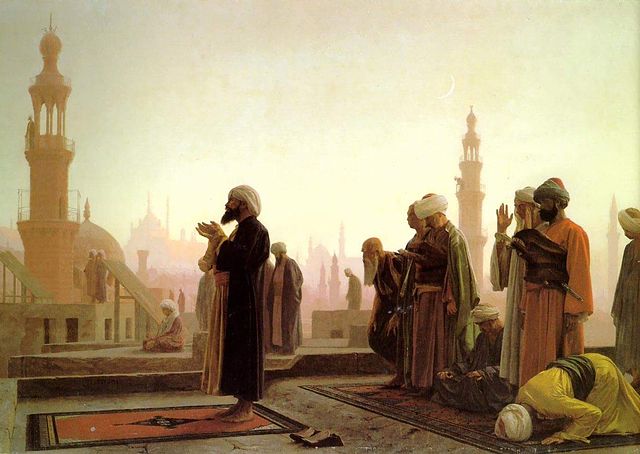
The main Practices and Rituals in islam is Prayer (shalat) It is the practice of formal prayer in Islam. Its supreme importance for Muslims is indicated by its status as one of the Five Pillars of Sunni Islam, of the Ten Practices of the Religion of Twelver Islam. Salah is a ritual prayer, having prescribed conditions, a prescribed procedure, and prescribed times.

Performing salah is obligatory, with a few dispensations for those for whom it would be difficult. For those whom it is difficult they can perform Salah in a way which is suitable for them. They can perform Salah while sitting down (in case of illness or any situation like traveling in a vehicle, on a horse, etc), while lying down (in case of illness) and even with indication. To perform valid Salah, Muslims must be in a state of ritual purity, which is mainly achieved by ritual ablution according to prescribed procedures.
After Salah, often duas and munajats are held. Certain hadiths recommends reciting Ayatul Kursi, Al-Falaq, Al-Nas , etc. after Salah for protection
For Sunnis and Musta'lids, salah is prescribed at five periods of the day, which are measured according to the movement of the sun. These are: near dawn (fajr), just after noon (dhuhr), in the afternoon (asr), just after sunset (maghrib) and around nightfall (isha'a). Under some circumstances prayers can be shortened or combined (according to prescribed procedures). In case a prayer is skipped, it must be made up later
While For Shia doctrine permits two sets of these prayers to be performed in succession. Sufis often perform dhikr after the conclusion of prayers.
more
-
The Soul and Its Powers
The soul (nafs) employs the body to attain its goals. The soul has also other names, including spirit (ruh), intelligence ('Aql), and heart (qalb) although these terms have other usages. The primary faculties of the soul are :
Intelligence (al-quwwah al-aqliyyah)- angelic.
Anger (al-quwwah al-ghadabiyyah)- ferocious.
Desire (al-quwwah al-shahwiyyah)- animalistic.
Imagination (al-quwwah al-wahmiyyah)- demoniac.
The value of these forces is obvious. Reason distinguishes good and evil: ghadab (anger) helps defend against aggression: sexual attraction maintains the survival of the human species; and imagination allows visualization of universals or particulars. Reason is man's guiding angel. Anger brings violence; passions (hawā) encourage immorality; and imagination provides material to formulate demoniac plots and machinations. If reason controls the other faculties, it moderates excesses and ensures useful performance.
Allah says in surat Ash-Shams: And by nafs, (soul), and Him Who perfected him in proportion; Then He inspired him corruption and its righteousness; Indeed he succeed who chooses to purify his ownself; and indeed he fails who corrupts his ownself. The soul is in a continuous jihad (struggle) between these four powers for domination. The victorious trait determines the soul's inclination.
more
-
The Twilights Trilogy
The period between sunset and dusk is called twilight. Astronomers recognize three stages of twilight. Civil twilight begins when the sun's disc is 6 degrees below the horizon . Other celestial objects are still clearly visible at this point. Then Nauitical twilight until the sun sank below the horizon 12 degrees. In this period the horizon looks unclear. astronomical twilight-total dark-started when the Sun is 18 degrees below horizon. The same thing happened - in reverse order, when the sun will rise.

The position of the Sun in the Determination of Salat Time ,
"True prayer is an obligation that is determined his time upon those who believe "(QS An-Nisa: 103).
Of the provisions contained in the Qur'an and Hadith to be understood that the provisions of prayer is associated with the position of the sun on the celestial sphere. Therefore, in determining the initial prayers, astronomical data is the most important positions of the sun, especially high, h, or zenith distance. The phenomenon of early dawn (morning twislight), sunrise (sunrise), the sun crossed the meridian (culmination), sunset (sunset), and late afternoon (evening twilight) associated with the sun's zenith distance.
Isha dan ShubuhIsha time is defined as when red light (syafaq) in the sky are gone, until dawn shaddiq. While Shubuh time begins when the dawn shaddiq appear, until shortly before sunrise (syuruq). Please note, that shortly after sunset, the sky not directly darkened, because our planet has an atmosphere so that even though the sun is below the horizon (the west), there is still the reflected sunlight in the sky.
From the astronomical side, there is light in the sky before sunrise and after sunset is called Twilight, which literally means "light between two", ie between day and night. In Arabic, "twilight" is called syafaq. Astronomically, there are three definitions of twilight:
Civil Twilight, when the sun is 6 ° below the horizon
Nautical twilight, ie when the sun is 12 ° below the horizon
Astronomical Twilight, when the sun is 18 ° below the horizon
Astronomers think "Twilight Astronomical evening" marks the beginning of the night; but this definition is for practical purposes only.
Astronomically, the time is the inverse of the time Shubuh and Isha '. Toward morning, dawn marked by a towering light (vertical) on the eastern horizon; This is called "dawn kadzib". The light is then spread on the horizon (horizontally), and is called the "dawn shaddiq".
Allah Know The Best
more

-
Solomons Temple
Solomons Temple (kuil sulaiman)
Solomon's Temple, also known as the First Temple, was the main temple in ancient Jerusalem, on the Temple Mount (also known as Mount Zion), before its destruction by Nebuchadnezzar II after the Siege of Jerusalem of 587 BCE.
more
-
The Cow (FEMALE CATTLE)
The entire verse of surah Al Baqarah including Madaniyyah class, is the longest letter in between the letters in which the Quran there are also verses that stuck. It is named Al-Baqarah (The Cow) because it mentioned the story of slaughter cows that are commanded by Allah to the Children of Israel (verses 67 through 74), which described the character of the Jews in general. Named Fusthaatul-Quran Koran peak because it contains some laws that are not mentioned in another letter. Named also letter alif-Lam-Mim because it starts with the letter Alif-Lam-Mim.
Principles of contents :
1. Faith : Da'wah Islamiyah who is faced to the Muslims, the Book and the polytheists.
2. The laws : Command his prayers; practice regular charity; law of fasting; law Hajj and Umrah; Qisas law, things lawful and unlawful; bernafkah in the way of Allah; wine and gambling laws; way sympathize orphans, the prohibition of usury; accounts payable; living and who deserve it; wasiyat to the two mothers-fathers and relatives; legal oath, the obligation to submit the mandate; magic; law undermine the mosque; meubah law books of God, the law of menstruation, 'iddah thalak, khul'a, ilaa' and law wet nurse; laws apply, dowry, prohibition to marry idolatrous women and vice versa; the laws of war.
3. The stories : The story of the creation of Prophet Adam; the story of Prophet Ibrahim; the story of Prophet Musa the Children of Israel.
4. And others : The properties of the righteous; nature of hypocrites; the attributes of God; parables; mecca, resurrection after death.
The conclusion is:
1. Explaining some of the law in Islam.
2. Suggested several parables.
3. Put forward any proofs.
Correspondence letter by letter Al Baqarah Ali 'Imran
1. In Surat al-Baqarah mentioned Adam a.s. which immediately created by God, is in the letter Ali 'Imran is mentioned about the birth of Prophet Isa both of which God made to deviate from custom.
2. In Surat al-Baqarah nature and deeds of the Jews is widely spread, accompanied by proof to proof-proof break those who defend error, was in the letter of Ali 'Imran spread similar matters relating to the Nazarenes.
3. Surat Al Baqara begins by mentioning the three classes of human beings, are the believers, unbelievers and hypocrites, being the letter 'Ali' Imran begins by mentioning the people who like menta'wilkan verse ta'wil mutasyabihaat with the wrong for slandering the believers, and says people who have expertise in menta'wilkannya.
4. Surat Al Baqara quits with a plea to God to be forgiven the mistakes and omissions in performing obedience, was the letter 'Ali' Imrandisudahi with a request to God that He may give rewards for good deeds of His servants.
5. Surat Al Baqara begins by stating the properties of the righteous, being the letter 'Ali' Imran begins with pious orders
more

-
Al Kahf The Cave
Surat Al-Kahf begins by explaining the nature of the Qur'an as a guide and a warning for humans, and also as a warning against those who say that God has a son. All existing surface of the earth is jewelry for the earth and intentionally created by God for man to think how to take advantage of it all. Allah's power and how broad his knowledge put forth in this letter by mentioning the story of Prophet Musa with Khidhr aces, the story of Dhu'l-Qarnayn and likens that if all the water that exists on earth and compounded by so much the ink used to write the science of God, certainly will not be sufficient. Then explained that all the charities that idolaters are not rewarded in the afterlife, is for the believers is provided Jannatun Na'im.

RELATIONSHIP Al-Kahf WITH THE LETTER Maryam
1. Both of these letters both contain wonderful stories, such as surat Al Kahf Cave Ashhabul story suggests, the story of Moses as with Khidhr as, the story of Dhu'l-Qarnayn, Maryam was a letter put forward as the story of a family Yahya at the time of his father Zakariya a.s. have been very old and his mother an old woman who was barren, and the story of the birth of Isa without a father.
2. The final part of Surat al-Kahf explains about the threat of God against the unbelievers who take protectors other than Allah, all their deeds vain and they put in hell, being at the end of the letter of Mary repeated taunts and threats of Allah against those who ascribe to Him.
more

-
What Is Hell

what and where is hell
Hell is a place that must be believed by adherents of the religion or cult as a place of eternal suffering after death. This place was in nature that we can not predict now as a reward for people who deviate from religious rules. in Islam Hell is a place of torture for the creatures of God who rebelled. They are the ones who rebel against the Shari'a of Allah and deny the Holy Prophet. The word hell is often mentioned in the holy book the Qur'an and the numbers are very much at all. In Arabic called naar النار (an-nar).
Anyone who put in hell, he will not come out of it. Hell has a door that stood firm and tightly closed. That is a prison for those who underestimate the news of the court hereafter. There are also people who go to heaven last time, after they were in torment in accordance with their sins which they had done. In the Qur'an mentioned the fuel of hell is men and stones (some are interpreting idols). The gate of Hell Angels led by Malik, who has 19 angels torturers in Hell, one of which is to be named in the Qur'an is Zabaniah.Although often described hell as a place of torture very hot, but there the weather becomes extremely cold hell. Mentioned in the Qur'an 38 : 57
hell or heaven
In the life of this world Allah The Almighty are given the freedom to the humans to choose between execute a command or away from restrictions. but in the life hereafter they will get revenge for what they have done. Peoples who trust and believe will get a decent place for what they have done and it's namely heaven. and People who do not believe will get the reward for what they do and there is Hell.
more

-
Types of punishment and torment in hell

In the Hereafter the punishment of the Fire will undergo a very painful form of punishment. The torture they suffered in hell that a variety of once, as God hath spoken as follows:
"In hell Jahannam, then burned them to her forehead, stomach and back." (At-Tauba [9]: 35)
"When the shackles and chains placed around their necks, that they are dragged, into very hot water, then they burned in a fire." (Al-Mu'min [40] :71-72)
"Seize him and drag him ketengah-center hell. Then pour over his head seksaan (from) very hot water. Taste, thou mighty man more noble." (Ad-Dukhan [44] :47-49)
"Seize him and his hand belenggulah kelehernya. And then insert him into the fire of a burning hell. Then belitlah him with a chain seventy cubits long." (Al-Haqqah [69] :30-32)
"The infidels will be made for them garments of fire, boiling water poured over their heads. With water luluhkan destroyed all that is in their bellies and their skins too. And the whip-whip of iron. Every time they want to get out of hell because of their misery, then they are returned to them, (and said unto them): "Taste the punishment of burning." (Al-Hajj [22] :19-22)
Allah Know The Best
more

Subscribe to:
Posts (Atom)