Showing posts with label islamic rituals. Show all posts
Showing posts with label islamic rituals. Show all posts
-
Belief In God Allah The Almighty
The First Basic Islamic Beliefs is Belief in God (Allah The Almighty)
Muslims believe in one incomparable God, Who has no son nor partner, and that none has the right to be worshipped but Him alone. He is the true God, and every other deity is false. He has the most magnificent names and sublime perfect attributes. No one shares His divinity, nor His attributes. In the Quran, God describes Himself :
قُلْ هُوَ اللَّهُ أَحَدٌ, اللَّهُ الصَّمَدُ, لَمْ يَلِدْ وَلَمْ يُولَدْ, وَلَمْ يَكُنْ لَهُ كُفُوًا أَحَدٌ
Say, “He is God, the One. God, to Whom the creatures turn for their needs. He begets not, nor was He begotten, and there is none like Him.” (Quran, 112:1-4)
 No one has the right to be invoked, supplicated, prayed to, or shown any act of worship, but God alone. God alone is the Almighty, the Creator, the Sovereign, and the Sustainer of everything in the whole universe. He manages all affairs. He stands in need of none of His creatures, and all His creatures depend on Him for all that they need. He is the All-Hearing, the All-Seeing, and the All-Knowing. In a perfect manner, His knowledge encompasses all things, the open and the secret, and the public and the private.
He knows what has happened, what will happen, and how it will happen. No affair occurs in the whole world except by His will. Whatever He wills is, and whatever He does not will is not and will never be. His will is above the will of all the creatures. He has power over all things, and He is able to do everything. He is the Most Gracious, the Most Merciful, and the Most Beneficent. In one of the sayings of the Prophet Muhammad , we are told that God is more merciful to His creatures than a mother to her child.1 God is far removed from injustice and tyranny. He is All-Wise in all of His actions and decrees. If someone wants something from God, he or she can ask God directly without asking anyone else to intercede with God for him or her.
more

-
The Duty Of Human In The World
There are three basic tasks that we (human) agreed upon through the agreement is written in the Quran. three main tasks that no one can separate all should be implemented for the good of man and nature and its contents. Human safety will not matter if you only do one task only, because as soon as we (humans) enters an area or task, then the one between the two tasks into something that also should be implemented, and so when two tasks get accomplished the task into three must carried out.

Developing the full potential of human well-shaped body and spirit. foster harmonious relationship of each person with God, man and the universe. only and can only be done together , without any jealousy, envy, hasud which could lead to schism. because if the split occurs then inevitably inflicted warning will continue until we return to the unity and integrity as human beings is a single race.
Hablum Minallah
In relation to Hablum Minallah, maybe some people would think enough with prayer and dhikr, leaving the hustle and bustle of the world and all its problems, but let us not forget that in Grace that Allah The Almighty has given us, there are a proprietary of other people.
Treasures that we've got = there are some who become the property of another person who should we give through charity, (Allah Will Held accountable for this)Science that we get = there are rights of others, (curse of Allah be with those who hide or sold the knowledge)And the gift, the gift of Allah The Almighty who have been given to us is belong to others people.
Which would then put us into a second task that is Hablum Minannas.
The third task that is Hablum Minal Alam is the road that lies between two main tasks of man, in search of safety and tranquility of life in the world. keep it friendly nature, nature in order to maintain our own good while in this world. For the creation of these three functions are integrated within the person believing Muslim, can not be done alone, we can not do anything by self, because we needed a place to plant our charitable fields, and it is contained in other individual.
All of this is our duty to live in the world, unite our hearts and souls, eliminating envy, and imbalance. because Allah The Almighty has created man and the universe is balanced. (Verse)
And Allaah knows best
more

-
Death and Its Relevance to Muslims
Death is a question of ultimate concern for every human being, and Islam has a very vivid portrayal of the stages of death and the afterlife. Death is likened to sleep in Islam; interestingly, sleep in Arabic is called "the little brother of death." The Prophet spoke often of death, and the Quran is filled with warnings of the dangers of ignoring one's mortality and of not preparing for death before it is too late. In one poignant passage, the Quran reads,

And spend something (in charity) out of the substance which We have bestowed on you before death should come to any of you and he should say, "O my Lord! Why didst Thou not give me respite for a little while? I should then have given (largely) in charity, and I should have been one of the doers of good." But to no soul will Allah grant respite when the time appointed (for it) has come; and Allah is well-acquainted with (all) that ye do. (Quran, pp. 1473–1474)
Hence, the world is seen as an opportunity to cultivate for the hereafter, and time is seen as capital that human beings either invest wisely or squander, only to find themselves bankrupt in the next life. Muhammad said, "One of you says, 'My wealth! My wealth!' Indeed, have any of you anything other than your food that you eat and consume, your clothes that you wear out, and your wealth that you give in charity which thus increases in return in the next world?"
The idea of mentioning death and reflecting on death is very important in a Muslim's daily life, and attending any Muslim's funeral, whether known or not, is highly encouraged; for such attendance, one is rewarded greatly by God. Muhammad advised, "Make much mention of the destroyer of delights," which is death. He also said, "Introduce into your gatherings some mention of death to keep things in perspective." This is not seen as a morbid exercise, and Muslims surprisingly accept death, resigned to what is called "one's appointed time" ( ajal ). Like the telemere in biology that dictates how many times a cell may regenerate before dying, an individual's appointed term, according to Islam, is inescapable and fated. When a Muslim survives a near-death experience, such as a serious car accident, an operation, or an illness, he or she will often remark, "My appointed time did not come yet."
more

-
Islamic Religious Rituals
Religious Rituals, The Meaning of religious ritual and The impact on the lives
Religions have different rituals and practices that accompany and highlight religious experience. A ritual must fit into four categories. These four categories are that it must be a repetitive social practice, it must be set off from the routines of day to day life, it must follow some sort of ritual schema, and it must be encoded in myth. Ritual often has its roots in myth and religion, tying itself to ancient practices between the divine and humans. However, a ritual does not have to be religious in nature;
Religion can be defined as concepts or ideas and the practices associated with them. These practices hypothesize reality beyond that which is instantly available to the senses. An example of an old ritual that is encoded in myth and religious symbolism can be found in the catacombs of Sicily where over 2,000 dead bodies are kept. Most of these bodies have been embalmed or mummified and dressed in the attire that suited their profession, many of them being nobles, professionals, and merchants
Another great example of Ritual can be seen in the Sinhalese Buddhists of Sri Lanka. To cure people of illness the Sinhalese perform an elaborate exorcism ritual that involves all night dancing, singing, and role playing. The ceremony traditionally lasts from Midnight until 6 AM. At Midnight, costumed actors appear to portray the afflicting demons. As time passes, these figures are turned into comedic figures of ridicule. At 3 AM actors dressed as Sinhalese gods appear and reassert their dominance. The final performance, done around 6 AM, the absurdity of the demons if confirmed and the ritual ends. It is important to note that the ritual involves several crucial and distinctly separate phases
So, What are the religious rituals of Islam?
There are some religous rituals of islam, The Islam has Five Pillar and this five pillars of Islam make up the basic foundations of belief, for a Muslim the rituals in islam are summarized in the five pillars where most of rituals are performed in our neighborhood , The only Islamic rituals specific to Makkah are the Hajj and the Umrah - and their various individual components.
Read more About Five Pillars of Islam
What Are The Main Practices And Rituals Of Islam?
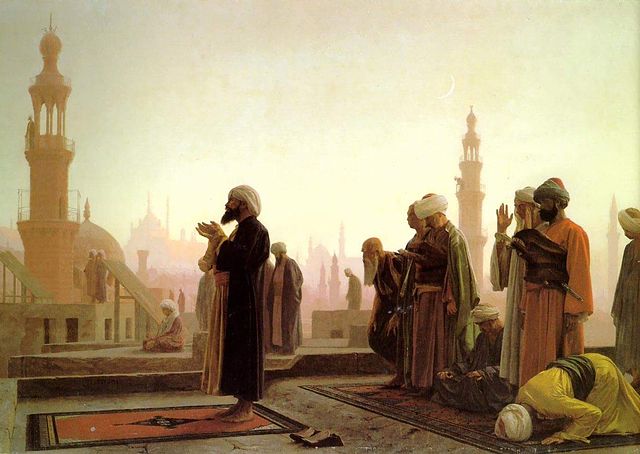
The main Practices and Rituals in islam is Prayer (shalat) It is the practice of formal prayer in Islam. Its supreme importance for Muslims is indicated by its status as one of the Five Pillars of Sunni Islam, of the Ten Practices of the Religion of Twelver Islam. Salah is a ritual prayer, having prescribed conditions, a prescribed procedure, and prescribed times.

Performing salah is obligatory, with a few dispensations for those for whom it would be difficult. For those whom it is difficult they can perform Salah in a way which is suitable for them. They can perform Salah while sitting down (in case of illness or any situation like traveling in a vehicle, on a horse, etc), while lying down (in case of illness) and even with indication. To perform valid Salah, Muslims must be in a state of ritual purity, which is mainly achieved by ritual ablution according to prescribed procedures.
After Salah, often duas and munajats are held. Certain hadiths recommends reciting Ayatul Kursi, Al-Falaq, Al-Nas , etc. after Salah for protection
For Sunnis and Musta'lids, salah is prescribed at five periods of the day, which are measured according to the movement of the sun. These are: near dawn (fajr), just after noon (dhuhr), in the afternoon (asr), just after sunset (maghrib) and around nightfall (isha'a). Under some circumstances prayers can be shortened or combined (according to prescribed procedures). In case a prayer is skipped, it must be made up later
While For Shia doctrine permits two sets of these prayers to be performed in succession. Sufis often perform dhikr after the conclusion of prayers.
more
Subscribe to:
Posts (Atom)